Guide
Type I, II, III or Universal: which 608 certification do you actually need
A working tech's decision guide to EPA 608 certification types, matched to the equipment you actually service, and why Universal is usually the right call.
EPA Section 608 certification comes in four flavors: Type I, Type II, Type III and Universal. Pick the right one and you sit a single exam that covers everything your work will ever ask of you. Pick the wrong one and you either studied for material you will never use or, worse, you are standing in front of a piece of equipment your card does not permit you to open. This guide sorts the decision by the only thing that actually matters: the equipment your work puts in front of you.
The framework here comes straight from the regulation, 40 CFR Part 82, which requires anyone whose work could reasonably be expected to violate the integrity of the refrigerant circuit to hold certification for the class of appliance being serviced. The types are defined by equipment class, so the way to choose is to inventory your work honestly, present and near future, and match it against the classes. Let us walk each one.
How the regulation divides the equipment
The regulation slices the world of stationary refrigeration and air conditioning into three classes. Small appliances are factory-sealed units containing five pounds or less of refrigerant, and they belong to Type I. Medium-, high- and very high-pressure appliances belong to Type II. Low-pressure appliances belong to Type III. Universal is not a fourth class of equipment; it is the credential you hold when you are certified for all three.
Notice what the classification keys on: how the appliance is built and the pressure regime it operates in, not the building it sits in or the industry it serves. A sealed system is a sealed system whether it is in a home kitchen or a hotel hallway. That is why the honest question is never what kind of buildings do I work in, but what kind of circuits do I open. Answer that and the type picks itself.
One more structural point before the details: every type exam shares the same 25-question Core section, then adds 25 questions specific to its equipment class. The Universal exam is all of it in one sitting, 100 questions total. That shared Core matters for the decision, because the incremental cost of a broader credential is only the additional sector material, not a whole new exam from scratch.
Type I: small appliances
Type I covers small appliances, which the regulation defines as factory-sealed units containing five pounds or less of refrigerant. Think of the equipment that arrives from the factory charged and welded shut: household refrigerators and freezers, window air conditioning units, and similar sealed systems. The defining tests are the factory seal and the five-pound line, so when you are unsure whether a unit qualifies, check how it was built and what it holds rather than guessing from where it sits.
Who is genuinely well served by Type I alone? Appliance repair techs whose sealed-system work stays on domestic refrigeration. Property maintenance staff whose refrigerant-circuit exposure is limited to window units and household refrigerators. Recyclers and scrap handlers who recover refrigerant from small appliances before disposal. If that describes your work and you are confident it will keep describing your work, Type I is a legitimate, sufficient credential, and it is the only type with a mail-in exam option, though that format demands 84 percent to pass instead of the 70 percent required on a proctored closed-book test.
The caution is career drift. Sealed-system work has a way of expanding: the appliance tech gets asked about the mini split, the maintenance role grows into the rooftop unit. The moment your work touches equipment beyond the small-appliance class, Type I no longer covers you, and you are back in the exam room anyway. Choose Type I because your work is genuinely bounded, not because it looks like the easiest door into the trade.
Type II: medium-, high- and very high-pressure appliances
Type II covers medium-, high- and very high-pressure appliances, and in practice this is the certification that maps to the bulk of residential and commercial HVAC service work. Residential split systems, heat pumps, packaged rooftop units, and the wide range of commercial refrigeration built on higher-pressure circuits fall on this side of the line. If your day involves gauges on a condensing unit, this is your class.
If you are entering residential or light commercial HVAC service, Type II is the minimum credential that matches the job. It is also the type the regulation points to for a related category: MVAC-like appliances require either Type II certification or certification under the motor vehicle air conditioning program. So a tech whose work strays into refrigeration or air conditioning mounted on equipment beyond ordinary cars should read that boundary carefully before choosing an exam path.
The sector material for Type II tracks the working realities of higher-pressure equipment: leak detection, recovery techniques, safety, shipping and disposal, all framed for the equipment class. It is 25 questions on top of the 25-question Core, closed-book and proctored, with 70 percent to pass. There is no mail-in option for Type II, so plan on a proctored sitting through an EPA-approved certifying organization.
Type III: low-pressure appliances
Type III covers low-pressure appliances. The equipment most techs picture here is the low-pressure chiller, the kind of machine that lives in plant rooms and serves large buildings. This is specialist territory: the population of techs who work on low-pressure equipment is smaller, the machines are large, and the work is usually concentrated in commercial and industrial mechanical service rather than spread across the trade.
If your career is headed into chiller work, building plant operations, or a mechanical contractor's large-equipment division, you need Type III coverage, and realistically you should be looking at Universal rather than Type III alone. Very few techs touch low-pressure equipment exclusively. The same shops that service chillers service higher-pressure equipment too, and a tech who can only legally open one class of circuit is a scheduling problem waiting to happen.
Like Type II, the Type III exam is closed-book and proctored: 25 Core questions plus 25 low-pressure sector questions, 70 percent to pass, delivered through an EPA-approved certifying organization. The sector section covers the same working categories, leak detection, recovery techniques, safety, shipping and disposal, applied to the low-pressure class.
The MVAC-like boundary
Vehicle-mounted equipment
MVAC-like appliances require Type II certification under Section 608 or certification under the motor vehicle air conditioning program. If your work involves air conditioning or refrigeration on vehicles or similar equipment, confirm the classification before you register for an exam.
This boundary trips up techs who move between stationary and mobile work. The rule is simple to state: for MVAC-like appliances, Type II under Section 608 or the motor vehicle program will do, and ordinary stationary equipment stays under the 608 types described above. What requires care is classifying the specific equipment in front of you, because the machine's mounting and use, not your job description, determines which program applies. When the classification is unclear, resolve it before exam day, not after.
Why most working techs sit Universal
Universal certification covers all three types, and there are three practical reasons it is the default answer for a working technician. First, coverage: with Universal you never audit a job against your card. The mini split, the walk-in, the chiller room you get sent into two years from now, all of it is inside your credential, and you make career decisions based on the work you want rather than the paper you hold.
Second, efficiency: the Universal exam is 100 questions in a single sitting, the 25-question Core plus 25 questions for each of the three types. You were going to study the Core no matter which type you chose, because every exam includes it. The additional cost of Universal is the sector material for the classes you have not worked yet, and that material is exactly the kind of knowledge that makes you more useful on a crew anyway. One study push, one exam day, no return trips.
Third, the market: employers hiring service techs prefer a card with no gaps, because dispatch does not want to check certifications before assigning a call. None of that is a knock on the single types, which exist for genuinely bounded roles. It is simply the honest observation that most careers in this trade do not stay bounded, and the regulation sets no expiration on the credential, so the broader card you earn once serves you for as long as you work.
A note on format while we are here: the closed-book condition applies to Universal the same as to the single types, and it is proctored through an EPA-approved certifying organization at the same 70 percent bar. Some techs assume the combined exam must carry a tougher standard, and it does not. Same bar, same conditions, more sections. If you can prepare one sector to a passing standard, you can prepare three, and the Core you must learn either way carries across all of them.
Mistakes techs make when choosing
The first common mistake is choosing a type by exam length instead of by work. Type I looks like the smallest lift, so people sit it as a starter credential and plan to upgrade later. But the exam structure does not reward the incremental path: every exam repeats the same 25-question Core, so a tech who sits Type I now and Type II next year studies and answers the Core material twice. If the work is going to demand the broader credential eventually, the cheapest route in study time is to sit the broader exam once. The single types earn their keep for bounded roles, not as stepping stones.
The second mistake is classifying equipment by where it lives instead of how it is built. A unit in a commercial building is not automatically outside Type I, and a unit in a house is not automatically inside it. The regulation draws the small-appliance line at factory-sealed construction and a charge of five pounds or less, and the pressure classes are defined by the appliance, not the address. When you inventory your work to make this decision, list actual equipment, not building types, and check each item against the definitions rather than assuming from context.
The third mistake is treating the decision as permanent in the wrong direction. Certification never shrinks: under the regulation your credential does not expire, so a broader card never has to be defended or renewed. What does change is your work. Techs consistently underestimate how quickly a role expands into new equipment, and the cost of guessing narrow is a second exam registration, a second study cycle, and jobs you have to turn down in the meantime. If you are going to be wrong, be wrong in the direction that still lets you open the circuit in front of you.
The decision, as a list
- You service only factory-sealed small appliances holding five pounds or less, such as household refrigerators and window units, and you are confident the work stays there: Type I
- You work, or will work, on residential or commercial split systems, heat pumps, packaged units or other higher-pressure equipment: Type II at minimum
- Your work includes low-pressure chillers or other low-pressure appliances: Type III coverage, which in practice usually means Universal
- Your work touches MVAC-like equipment: Type II or the motor vehicle air conditioning program, and confirm the classification first
- You are entering the trade, changing roles, or unsure where your work will go: Universal
- You cannot say with confidence which single class your next twelve months of work stays inside: Universal
| Credential | Equipment class | Exam | Typical fit |
|---|---|---|---|
| Type I | Small appliances: factory-sealed, five pounds or less | 25 Core + 25 sector; proctored at 70 percent, or mail-in at 84 percent | Appliance repair, small-appliance recovery and disposal |
| Type II | Medium-, high- and very high-pressure appliances | 25 Core + 25 sector; closed-book, proctored, 70 percent | Residential and commercial HVAC service |
| Type III | Low-pressure appliances | 25 Core + 25 sector; closed-book, proctored, 70 percent | Chiller and large-plant work |
| Universal | All three classes | 100 questions in one sitting; closed-book, proctored, 70 percent | Most working technicians |
Making the call
Sit down and list the equipment you have touched in the last year and the equipment the jobs you want would put in front of you. Match that list against the classes above and the answer usually falls out on its own. If the list lives entirely inside factory-sealed small appliances, Type I is honest and sufficient. If it lives in split systems and packaged equipment, Type II covers today, and Universal covers the career. If chillers appear anywhere on the list, or if the list has question marks on it, take the 100-question exam once and be done with the question permanently.
Whichever credential you choose, the mechanics are the same: an EPA-approved certifying organization administers the exam, results and your wallet card are due within 30 days each, and the regulation sets no expiration or renewal requirement on the certification. Choose the type that matches your work, prepare to a closed-book standard, and the decision you make once will hold up for as long as you are in the trade.
Pick your type, then test yourself against real exam-style questions.
The 608 fact sheet
One printable page: the four certification types, the exam structure, the leak-rate and recovery numbers, all cited to the regulation. Free.
No spam. One useful sheet and occasional notes.
The tools of the certified tech
 Elitech digital manifold setThe gauge set is the trade's daily instrument
 VIVOHOME 4CFM vacuum pumpEvacuation is half of what 608 regulates
 VEVOR recovery machineRecovery is the other half
 Fieldpiece DR58 leak detectorLeak detection is a Group II exam area
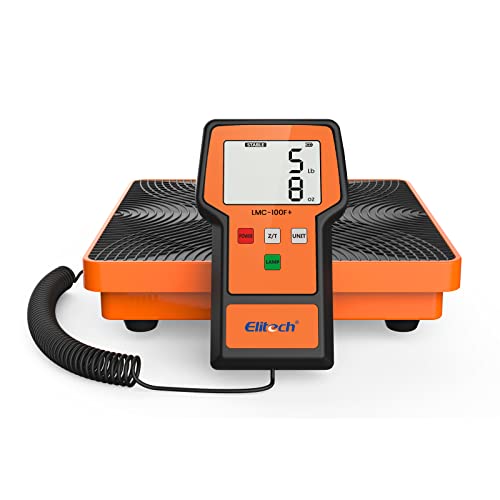 Elitech refrigerant scaleCharge tracking runs on the scale
Certification is the legal floor; these are the working instruments beside it. The full kit page.