Guide
The HVAC certification path: where 608 fits
What EPA Section 608 certification actually is, what it does and does not qualify you to do, and a realistic sequence for entering the HVAC trade with it.
Nearly everyone entering the HVAC trade hears the same first instruction: get your 608. It is good advice delivered without context, and the missing context causes real confusion. Some newcomers believe the 608 card is an HVAC license that lets them hang out a shingle. Others believe it is a formality they can skip until an employer complains. Both are wrong in ways that cost time and, in the second case, can cost legal exposure. Section 608 certification is a specific federal credential that does one specific thing, and understanding exactly what that thing is makes the rest of the certification landscape fall into place around it.
This guide places 608 in the larger picture: what the certification is and why it exists, the four types and the exam that grants them, what the credential does and does not qualify you to do, how it fits alongside state licensing and employer training, and a realistic sequence for someone starting from zero. Where the details depend on your state, this guide will say so plainly rather than guessing, because state rules vary and the only reliable source for them is your state's licensing authority.
What Section 608 actually is
Section 608 refers to the part of the Clean Air Act under which EPA regulates refrigerant handling, and the certification named after it is the federal credential for technicians who maintain, service, repair, or dispose of appliances containing regulated refrigerants. The center of gravity of the whole program is the venting prohibition: knowingly releasing regulated refrigerants to the atmosphere during service work is prohibited, with a narrow exception for de minimis releases, meaning the trace amounts that escape despite good faith use of proper recovery practices. Everything else in the program, from recovery standards to recordkeeping to the certification exam itself, exists in service of that prohibition.
That is why the credential exists at the technician level rather than only at the company level. The person whose hands are on the gauges is the person whose decisions determine whether refrigerant is captured or vented, so the regulation requires that person to demonstrate knowledge before touching regulated refrigerant. The 608 card is proof of that demonstration. It is a knowledge credential about refrigerant, not a skills license for the trade.
Two more program facts belong in the foundation. Records required under the regulation are kept for a minimum of three years, with servicing records attaching to appliances holding 50 or more pounds of refrigerant. And the regulation sets no expiration for the certification: a 608 card, once earned, does not lapse under the federal rule. Employers may want refreshed training, and staying current is professionally wise as refrigerants change, but the federal credential itself does not run out.
The four certification types
Certification comes in types that map to classes of equipment. Type I covers small appliances, meaning products factory charged and hermetically sealed with 5 pounds or less of refrigerant. Type II covers medium, high, and very high pressure appliances, which is where most residential and commercial air conditioning and refrigeration work lives. Type III covers low pressure appliances, the large chillers that operate below atmospheric pressure. Universal certification is all three types held at once.
| Certification | Equipment covered | Typical work |
|---|---|---|
| Type I | Small appliances: factory sealed, 5 pounds or less of refrigerant | Household refrigerators, window units, dehumidifiers |
| Type II | Medium, high, and very high pressure appliances | Residential and commercial AC and refrigeration systems |
| Type III | Low pressure appliances | Large low pressure chillers |
| Universal | All of the above | Unrestricted refrigerant work across appliance classes |
Which type should a newcomer pursue? For most people entering general HVAC service work, the honest answer is Universal. The incremental study beyond Type II is modest, the credential never expires under the regulation, and holding Universal means never discovering mid-career that a chiller job or an appliance job sits outside your card. Type I alone makes sense for someone whose work is genuinely confined to small appliances, such as appliance repair or recycling. But if you are studying anyway, studying for all three types at once is usually the efficient move.
The exam
The exam is built from a Core section plus a section for each type sought. Core runs 25 questions and covers the material common to all refrigerant work: the regulatory framework, refrigerants and their environmental effects, and the shared rules like the venting prohibition. Each type section adds 25 questions specific to its equipment class. The passing standard is 70 percent, and the exam is closed book, taken through an approved certifying organization with a proctor.
Type I carries one alternative path worth knowing about: it can be earned through a mail-in exam without a proctor, and that version carries a higher passing standard of 84 percent. The tradeoff is deliberate. Remove the proctor and the bar goes up. For a candidate deciding between paths, the practical implication is simple: the proctored route asks you to perform under exam conditions at 70 percent, while the mail-in route trades convenience for a stiffer standard, and it only exists for Type I.
A candidate going for Universal therefore faces 100 questions in total: 25 Core plus 25 for each of the three types. The sections are scored so that each must be passed, which shapes study strategy. Core is unavoidable and worth overlearning, because it is the foundation every candidate must clear regardless of type. The type sections reward targeted study: leak rates and pressure specific rules for Type II, low pressure system behavior for Type III, small appliance recovery for Type I.
What 608 does not qualify you to do
Here is the boundary that trips newcomers. Section 608 certification qualifies you to handle regulated refrigerants. It is not a license to practice the HVAC trade. It is not a state contractor license, not a mechanical license, not a business license, and not a substitute for any of them. A 608 card holder who advertises HVAC services to the public without whatever license their state requires is operating outside the rules of their state, full stop, and the federal card is no defense.
The cleanest way to hold the distinction is this: 608 is about the refrigerant, and state licensing is about the trade. The federal government cares that the person opening a refrigerant circuit knows how to keep the refrigerant out of the atmosphere. Your state cares whether you are competent to contract for mechanical work, pull permits, wire equipment, work on fuel gas, and stand behind the work commercially. Those are different questions, answered by different authorities, and holding the answer to one says nothing about the other.
The same boundary runs in other directions too. Motor vehicle air conditioning service is governed by its own rules and its own credential, distinct from 608, even though the two worlds meet at disposal. And no certification, federal or state, substitutes for the safety training an employer provides for the specific equipment and environments you will work in. The 608 card is one tile in the mosaic. A necessary tile, and the only one the federal refrigerant rule demands, but one tile.
The rule of thumb
608 answers one question: may this person handle regulated refrigerant. Every other question about working in the trade, including whether you can contract for work, pull permits, or call yourself a licensed HVAC professional, is answered by your state's licensing authority, not by EPA.
How 608 pairs with state licensing and employer training
In practice, a working HVAC career rests on three legs. The first is the federal 608 certification, which is uniform nationwide and never expires under the regulation. The second is state licensing, which varies enormously: some states license the trade at the individual level, some at the contractor level, some layer municipal requirements on top, and the thresholds where a license becomes mandatory differ from place to place. This guide will not pretend to summarize fifty different regimes. Before you plan a career step around licensing, confirm the requirements with your state's licensing authority directly.
The third leg is employer training, and newcomers consistently underrate it. The 608 exam certifies knowledge about refrigerant rules. It does not teach you to braze, to diagnose a dead board, to read a wiring diagram under pressure, or to run a service call a customer would want repeated. That competence comes from structured apprenticeship, trade school, manufacturer training, and above all supervised hours in the field. Employers know this, which is why entry level job postings ask for the 608 card as a floor and expect to build the rest themselves.
Seen this way, the 608 card is best understood as the credential that makes you trainable. It is the item an employer can require on day one, because without it you cannot legally do the refrigerant portion of the work you are being trained for. That is exactly why it is the standard first move for someone entering the trade: it is federal, it is uniform, it has no expiration under the regulation, and it unlocks the on the job learning that actually builds a technician.
A realistic entry sequence
Sequences vary by person and by state, but a defensible default for someone starting from zero looks like the list below. The spirit of it is to front load the uniform federal credential, because it is the same everywhere and nothing else in the sequence can start without it, and to defer state specific commitments until you have confirmed the actual rules where you live.
- Study the Core material first: the regulatory framework, the venting prohibition and its de minimis exception, refrigerant classes and their environmental effects, and the recovery and recordkeeping rules.
- Decide between a single type and Universal. If your goal is general HVAC work, prepare for Universal so the credential never becomes the constraint.
- Take the exam through an approved certifying organization. Plan around the structure: 25 Core questions plus 25 per type, 70 percent to pass, closed book with a proctor, with the mail-in alternative existing only for Type I at an 84 percent standard.
- While studying, contact your state's licensing authority and learn the actual licensing landscape for the work you want: what requires a license, at what level, and what the path onto that ladder looks like.
- Apply for entry level positions with the 608 card in hand, and treat the first years as the real education: supervised field hours, employer training, and manufacturer coursework.
- Keep records of your certification and your work history from the start. The certification itself does not expire under the regulation, but employers and licensing bodies will ask you to document both the card and the experience.
Notice what the sequence does not include: waiting. Because the 608 credential has no experience prerequisite, no degree requirement, and no expiration under the regulation, there is no strategic reason to delay it. It is the rare credential in the trades that a motivated person can earn before their first day on any job, and having it changes the quality of the first job available.
Where the path goes from here
The 608 card is the floor, and floors are for standing on. From it, the path branches according to the work: deeper employer training and manufacturer certifications for equipment specialization, state licensing steps as your role grows toward contracting or unsupervised work, and eventually the business side credentials if independence is the goal. Each branch has its own authorities and its own requirements, and the state specific ones should always be confirmed with your state's licensing authority rather than assumed.
What stays constant across every branch is the thing the 608 exam certified in the first place: refrigerant handled correctly, captured rather than vented, documented rather than guessed at. The trade changes refrigerants, equipment, and tools over a career. The obligation the federal credential represents does not. Learn it properly at the start and it never needs relearning.
Ready to start the path? Take a free 608 practice exam and see where you stand.
The 608 fact sheet
One printable page: the four certification types, the exam structure, the leak-rate and recovery numbers, all cited to the regulation. Free.
No spam. One useful sheet and occasional notes.
The tools of the certified tech
 Elitech digital manifold setThe gauge set is the trade's daily instrument
 VIVOHOME 4CFM vacuum pumpEvacuation is half of what 608 regulates
 VEVOR recovery machineRecovery is the other half
 Fieldpiece DR58 leak detectorLeak detection is a Group II exam area
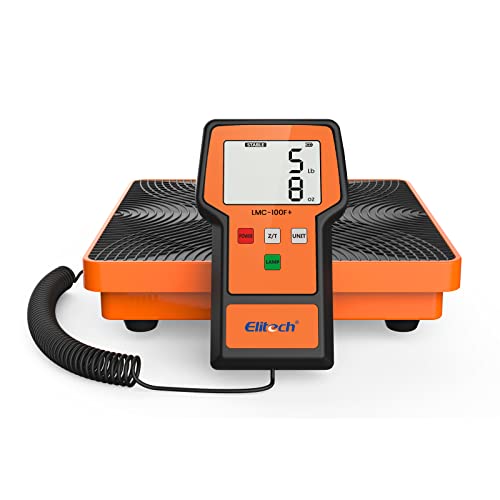 Elitech refrigerant scaleCharge tracking runs on the scale
Certification is the legal floor; these are the working instruments beside it. The full kit page.