Guide
Type II certification: the split-system world
A complete guide to EPA 608 Type II certification: the equipment it covers in field terms, the MVAC-like boundary, what the exam section tests, and how to study for it.
If you lined up every technician who holds an EPA 608 card and asked what equipment their work actually touches, the biggest crowd by far would be standing under the Type II banner. Type II covers medium-, high- and very high-pressure appliances, and that regulatory phrase translates into the equipment that fills the everyday service world: the residential split system, the heat pump, the packaged rooftop unit, the condensing unit behind the restaurant, the walk-in cooler. If your career involves gauges on a condensing unit, Type II is not one option among several. It is the certification that matches the job, the minimum credential that makes you legal on the equipment your work van is driving toward.
This guide covers Type II from end to end: why it is the certification most residential and commercial techs actually need, what the medium- and high-pressure classes mean in field terms, the MVAC-like boundary that catches techs who move between stationary and mobile equipment, what the Type II section of the exam tests conceptually, and how to weight your study time so the closed-book format holds no surprises. As always, the source underneath everything here is 40 CFR Part 82, the regulation that defines the equipment classes, fixes the exam structure, and sets the passing bar. Nothing below depends on rumor, and everything below is checkable against the rule.
The certification most techs actually need
Section 608 requires certification for anyone whose work could reasonably be expected to violate the integrity of the refrigerant circuit, and it splits the certification by equipment class. Type I covers small appliances, the factory-sealed units holding five pounds or less. Type III covers low-pressure appliances, the chiller-plant world. Type II covers everything in between and above: the medium-, high- and very high-pressure appliances that make up the overwhelming bulk of installed residential and commercial refrigeration and air conditioning. The classes are defined by the appliance and its pressure regime, not by the building or the industry, and the class your equipment falls into decides the card you need.
Here is the practical consequence. A residential service tech opens circuits on split systems and heat pumps: Type II equipment. A light commercial tech adds packaged rooftop units and ductless systems: Type II equipment. A refrigeration tech runs a route of walk-in coolers, reach-in cases and ice machines built on higher-pressure circuits: Type II equipment. The appliance repair tech living on factory-sealed domestic units is the Type I story, and the chiller mechanic is the Type III story, but the wide middle of the trade, the part hiring at every supply house counter, is a Type II story. If you are entering residential or commercial HVAC service and you want the single certification that matches the work you will actually be dispatched to, this is it.
One structural note before we go further: Type II is a closed-book, proctored exam, sat through an EPA-approved certifying organization, and it passes at 70 percent. There is no mail-in format for Type II. That option exists only for Type I, and it carries its own higher bar. For Type II the path is one path: prepare to a closed-book standard, sit the proctored exam, and clear 70 percent. The rest of this guide is about making that unremarkable.
Medium and high pressure, in field terms
The regulation sorts appliances by the pressure regime their refrigerant operates in, which is a statement about the refrigerant and the machine, not about the thermostat setting or the size of the building. Higher-pressure refrigerants and the equipment built around them dominate ordinary air conditioning and commercial refrigeration; low-pressure machines are a distinct family, mostly large chillers, with their own certification in Type III. You do not need to memorize equipment catalogs to place the gear in front of you. You need the habit of asking what class the appliance is, because the class, not the address, is what your card is checked against.
In field terms, the Type II class is the split-system world and its relatives. The condensing unit outside a house and the air handler in the attic, joined by field-installed refrigerant lines: Type II. The heat pump that runs that same circuit in both directions: Type II. The packaged rooftop unit serving a strip-mall tenant: Type II. The condensing units and evaporators behind walk-in coolers and freezers, the reach-in cases, the ice machines, the wide range of commercial refrigeration built on higher-pressure circuits: Type II. Notice what these have in common: most of them are field-assembled or field-connected systems, opened and serviced through gauge ports as a matter of routine, which is exactly why the technician certification exists.
It is worth drawing the two boundaries explicitly, because exam questions and job sites both live on them. The boundary with Type I is construction and charge: a factory-sealed unit holding five pounds or less is a small appliance no matter where it operates, so the window unit in a commercial office is still Type I territory, while the field-connected mini split in a bedroom is not, and never was, a small appliance. The boundary with Type III is the pressure regime: the low-pressure chiller in the plant room belongs to Type III even though the building it cools is full of Type II equipment. A Type II card covers the wide middle, and only the wide middle.
The MVAC-like note
Vehicle-mounted equipment
MVAC-like appliances require either Type II certification under Section 608 or certification under the motor vehicle air conditioning program. If your work touches air conditioning or refrigeration mounted on vehicles or similar equipment beyond ordinary passenger cars, confirm how the equipment is classified before you register for an exam.
This boundary deserves a plain-language walk-through, because it catches techs whose work straddles stationary and mobile equipment. Ordinary passenger-car air conditioning is handled under the motor vehicle air conditioning program, a separate certification path from Section 608. But there is a category of equipment the regulation calls MVAC-like appliances, air conditioning mounted on vehicles and similar equipment that is not an ordinary car system, and for that category the rule offers two doors: Type II certification under Section 608, or certification under the motor vehicle program. Either door is valid for MVAC-like equipment. What is not valid is assuming the question away.
The practical advice is simple. If your work is purely stationary, the MVAC-like category is exam knowledge, and you should know the rule because the Core and sector material expect you to. If your work genuinely includes equipment mounted on vehicles, machinery or similar platforms, classify the specific equipment before exam day, because the classification decides which certification covers you. A Type II card is the Section 608 answer for MVAC-like appliances, which is one more quiet argument for Type II as the working tech's baseline: it is the type the regulation points to when the stationary world and the mobile world meet.
What the Type II exam tests
The exam structure is the same for every type, fixed by the regulation: 25 Core questions plus 25 type-specific questions, 50 in total, closed-book and proctored at 70 percent. The Core is shared across all certification levels and covers three territories: the environmental impact of CFCs, HCFCs and their substitutes, the laws and regulations that govern refrigerant work, and the changing outlook of an industry in which older refrigerants are being phased down and replaced. Half of your exam, in other words, is not about split systems at all. It is about why the rules exist, what the rules say, and where the refrigerant landscape is heading.
Inside the Core, give the legal material particular respect. The venting prohibition is the anchor: knowingly releasing regulated refrigerant while maintaining, servicing, repairing or disposing of equipment is prohibited, with the sole exception of de minimis releases that occur during a good-faith effort to recover refrigerant. Recordkeeping follows: required records are generally kept for a minimum of three years, and owners of appliances holding 50 or more pounds of refrigerant must keep servicing records for that equipment. That 50-pound threshold is not an abstraction for a Type II tech. Plenty of commercial equipment in the Type II class holds charges that size, which means the paper trail on your service work is part of the job, and the exam expects you to know it.
The Type II section itself covers the categories the regulation assigns to every sector, applied to the medium- and high-pressure class: leak detection, recovery techniques, safety, shipping and disposal. Conceptually, leak detection is about how escaping refrigerant is found and how the problem is understood on the kinds of field-connected systems where joints, fittings and long line sets give refrigerant places to escape. Recovery is about what must happen to the refrigerant in a circuit before that circuit is opened or the equipment is retired: captured, not released, with the exam testing requirements and reasoning rather than hand skills. Safety covers the hazards of working with refrigerants under pressure. Shipping and disposal follow the refrigerant and the equipment off the job site, through transport and to the end of the line, with the rules that attach at each step.
Two things make the Type II section feel different from Type I in practice. First, the equipment is field-connected rather than factory-sealed, so the material leans on the realities of systems that are routinely opened for service: access, recovery from larger and more varied circuits, and the states refrigerant can be in when you take it out. Second, the class is broad. Small appliances are a tight family; medium- and high-pressure appliances run from a bedroom mini split to substantial commercial refrigeration, and the exam material spans that breadth. Neither point should worry you. The topics are enumerated, the format is fixed, and the section is 25 questions like every other. But the breadth is a reason to study the sector material deliberately instead of assuming field familiarity will carry you.
Study emphasis: where the points actually are
Here is the mistake experienced techs make with this exam: they prepare for the half they already live in. If you have run service calls on split systems, the Type II sector material will feel familiar, and familiarity breeds thin preparation. But the exam is closed-book. It asks for precise distinctions from memory: which requirement, which category, which rule. Recognition is not recall, and the gap between them is exactly 30 percent on a bad day. Meanwhile the Core, the material about refrigerant families, environmental impact, law and industry outlook, is the material no amount of field time teaches, and it is half the test. The techs who fail this exam usually fail it on the half they never studied.
So weight your study time by unfamiliarity, not by comfort. For most working candidates that means Core first and Core hardest: learn the environmental reasoning behind the regulation, the refrigerant families and their differences, the venting prohibition and its de minimis exception, the recordkeeping rules including the three-year general standard and the 50-pound servicing-records threshold, and the direction the industry is moving as older refrigerants give way. Then work the sector material as a subject in its own right: leak detection, recovery, safety, shipping and disposal for the medium- and high-pressure class, studied to the level where you can answer precise questions with the book closed. Newcomers without field time should not be discouraged: every point on this exam is learnable from study, and the exam rewards structured preparation over years on the gauges.
- Learn the Core as a real subject: environmental impact of CFCs, HCFCs and substitutes, laws and regulations, and the industry outlook, because it is half the exam and field experience does not teach it
- Master the venting prohibition and the de minimis exception in exact terms, along with the recordkeeping rules: three years generally, servicing records for appliances holding 50 or more pounds
- Work the Type II sector categories deliberately: leak detection, recovery techniques, safety, shipping and disposal for medium- and high-pressure equipment
- Know the boundaries cold: factory-sealed and five pounds or less means Type I, low-pressure means Type III, and MVAC-like appliances take Type II or the motor vehicle program
- Drill closed-book practice questions and grade yourself honestly against the 70 percent bar before you book the sitting
Pace the preparation across days rather than piling it into one long night, because a closed-book exam is a recall exam and recall is built by returning to material after you have started to forget it. When your practice scores sit comfortably above 70 percent under honest closed-book conditions, book the exam. The sitting itself is 50 questions through an EPA-approved certifying organization, and the credential you walk out with does not expire under the regulation. There is no renewal cycle in the rule, which means the understanding you build now is understanding you carry for the whole career.
Type II and the bigger picture
One honest closing note. Type II is the right minimum for the split-system world, and for many techs it is the right final answer too. But the same exam structure that makes Type II approachable makes Universal efficient: every type exam repeats the same 25 Core questions, so the incremental cost of the 100-question Universal exam is only the sector material for the classes you have not worked. If your career has any realistic path toward chiller plants or if you simply never want to audit a job against your card, weigh Universal before you register. If your world is residential and commercial service on medium- and high-pressure equipment, Type II fits that world exactly, and you can sit it knowing precisely what it covers, what it tests, and why it is the card the trade runs on.
Ready to test yourself on the Type II material? Take a practice exam now.
The 608 fact sheet
One printable page: the four certification types, the exam structure, the leak-rate and recovery numbers, all cited to the regulation. Free.
No spam. One useful sheet and occasional notes.
The tools of the certified tech
 Elitech digital manifold setThe gauge set is the trade's daily instrument
 VIVOHOME 4CFM vacuum pumpEvacuation is half of what 608 regulates
 VEVOR recovery machineRecovery is the other half
 Fieldpiece DR58 leak detectorLeak detection is a Group II exam area
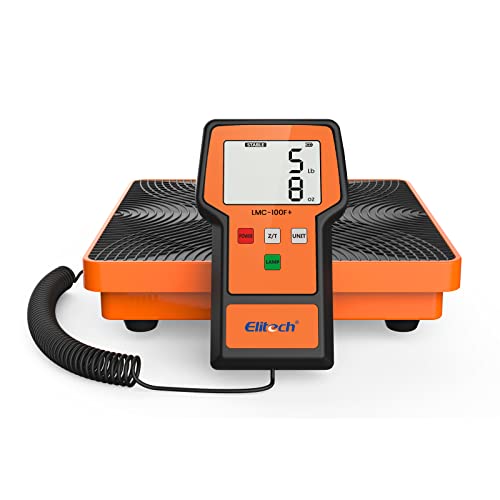 Elitech refrigerant scaleCharge tracking runs on the scale
Certification is the legal floor; these are the working instruments beside it. The full kit page.