Guide
The 608 leak rates: 10, 20, 30 and the 125 that gets EPA's attention
What the 10, 20, and 30 percent leak rate thresholds govern, how the rolling calculation works, when the 125 percent report kicks in, and how the exam actually tests all of it.
Three numbers govern leak repair obligations under EPA Section 608, and a fourth number marks the point where a leak stops being a maintenance problem and becomes a reportable event. The thresholds are 10, 20, and 30 percent. The reportable figure is 125 percent. Every one of them applies only to appliances holding 50 or more pounds of refrigerant, and every one of them shows up on the certification exam in some form. Yet most candidates who miss these questions do not miss them because the numbers are hard to memorize. Four numbers is nothing. They miss them because the exam asks which number belongs to which class of equipment, and the classification is where the traps live.
There is a second trap waiting past the exam, out in the field, and it catches working crews rather than test takers. The leak rate that triggers a repair obligation is calculated on a rolling basis, not over the lifetime of the appliance. A shop that tracks total refrigerant added since installation and divides by the years the machine has been running is doing arithmetic the regulation does not recognize, and that arithmetic can tell an owner a system is fine when the rolling calculation says the repair clock has already started.
This guide walks through the three thresholds and the equipment classes they attach to, the 50 pound gate that decides whether the thresholds apply at all, the rolling calculation and why lifetime tracking gets it wrong, the 125 percent chronic leak report, and the narrow exclusion for purged refrigerant destroyed at verified high efficiency. It closes with the way these rules are actually worded on the exam, because the pattern of the questions is more predictable than most study guides let on.
The three thresholds and the equipment they govern
For appliances with a full charge of 50 or more pounds of refrigerant, the regulation sets a leak rate above which the owner or operator takes on repair obligations. The threshold is not one number. It depends entirely on what the appliance does for a living. Commercial refrigeration equipment carries a 20 percent threshold. Industrial process refrigeration carries a 30 percent threshold. Comfort cooling and all other appliances that do not fall into the first two categories carry a 10 percent threshold.
Notice the shape of that list. The most forgiving threshold, 30 percent, belongs to industrial process refrigeration, the category with the largest, most complex, and hardest to service systems. The strictest threshold, 10 percent, belongs to comfort cooling, the category that includes the building chillers and large air conditioning systems that exist in nearly every commercial property. Commercial refrigeration, the equipment that keeps food and other perishables cold in stores, warehouses, and food service, sits in the middle at 20 percent.
| Equipment class | Leak rate threshold | What lives in this class |
|---|---|---|
| Commercial refrigeration | 20 percent | Refrigeration for retail food, cold storage, and similar commercial uses |
| Industrial process refrigeration | 30 percent | Refrigeration serving industrial and manufacturing processes |
| Comfort cooling and all other appliances | 10 percent | Chillers and air conditioning for occupant comfort, plus anything not in the first two classes |
The logic behind the split is worth internalizing rather than memorizing, because understanding it makes the numbers impossible to confuse. Industrial process systems are often custom built, enormous, and integrated into production lines that cannot simply be shut down for a leak search, so the regulation tolerates a higher annualized loss before obligations attach. Comfort cooling systems are comparatively standardized and serviceable, and there are a great many of them, so the regulation holds them to the tightest standard. Once you see the thresholds as a judgment about how hard the equipment is to service, the ordering stops feeling arbitrary.
Memory anchor
Ten, twenty, thirty: comfort, commercial, industrial. The thresholds rise as the equipment gets bigger and harder to open up. If you can rank the equipment by how disruptive a repair would be, you can reconstruct the entire table from scratch in the exam room.
Fifty pounds is the gate
None of the three thresholds means anything until an appliance crosses the 50 pound line. The leak repair framework applies to appliances containing 50 or more pounds of refrigerant. A rooftop unit holding a modest charge can leak at any percentage rate without triggering the threshold framework, because the framework simply does not reach it. This is the first classification question the exam likes to ask, and it is usually dressed up as a scenario: a system with a small charge develops a persistent leak, and the question asks which threshold applies. The correct answer is that none of them do, because the appliance is under the gate.
The 50 pound figure also anchors a recordkeeping obligation. Technicians and owners keep servicing records for appliances at or above the 50 pound line, and records under the regulation are kept for a minimum of three years. On the exam, the 50 pound number therefore does double duty. It can appear in a leak rate question, and it can appear in a records question, and a candidate who has only filed it under one heading will hesitate on the other.
In the field, the gate creates a practical habit worth building early: know the full charge of every large appliance you touch. The full charge is the denominator in the leak rate calculation and the trigger for the entire framework, and a surprising number of disputes about whether a repair obligation exists come down to nobody having a reliable figure for how much refrigerant the system actually holds when it is properly charged.
Which appliance is which: the classification question
The exam rarely asks a question in the form of what is the leak rate threshold for commercial refrigeration. That version is a gift. The realistic version describes a piece of equipment and makes you classify it before you can pick a number. A refrigeration system serving a process line at a manufacturing plant is industrial process refrigeration, so 30 percent. A rack system keeping display cases cold at a grocery store is commercial refrigeration, so 20 percent. A chiller conditioning air for a hotel is comfort cooling, so 10 percent.
The category that trips people is the third one, because its official shape is comfort cooling and all other appliances. It is a catch-all. If a large appliance is not refrigeration for commercial purposes and not refrigeration for an industrial process, it lands in the 10 percent bucket regardless of whether anyone would casually call it comfort cooling. Candidates who memorize the category as air conditioning only will misclassify the leftovers. The safe mental model is a decision tree with two questions: is it commercial refrigeration, and is it industrial process refrigeration. Two answers of no means 10 percent.
It also matters what the classification is not based on. It is not based on the refrigerant in the system. It is not based on the size of the charge beyond the 50 pound gate. It is not based on where the equipment sits or who owns it. It is based on the function the refrigeration serves. A large system doing process cooling does not become comfort cooling because it happens to be installed on a roof, and a chiller does not become industrial process refrigeration because the building it conditions is a factory office.
- Ask what the cold is for, not where the machine is: cooling for occupants means comfort cooling, cooling for goods in commerce means commercial refrigeration, cooling for a production process means industrial process refrigeration.
- Confirm the appliance holds 50 or more pounds before any threshold applies at all.
- Treat the 10 percent category as the default for anything that fails the other two tests, not as a narrow air conditioning label.
- When a scenario mixes functions, focus on what the refrigeration circuit in question actually serves.
The rolling calculation trap
Here is the part of the leak rate framework that working crews get wrong more often than exam candidates do. The leak rate is calculated on a rolling basis. It is not a lifetime average. The distinction sounds like an accounting detail, and that is exactly why it is dangerous: the lifetime average is the intuitive calculation, the one a conscientious crew invents on its own when nobody tells it otherwise, and it systematically understates the leak rate of a system whose condition is getting worse.
Picture a large commercial refrigeration rack that ran nearly tight for years and has recently developed a real leak. A crew tracking lifetime additions adds up every pound ever charged into the machine and spreads it across the machine's entire service history. All those early tight years dilute the recent losses, and the lifetime figure comes out comfortably under 20 percent. The rolling calculation looks at the recent window, sees the recent additions against the full charge, annualizes what is actually happening now, and can land far above the threshold. Same machine, same service tickets, opposite compliance answer.
The rolling approach exists precisely to catch deterioration. A leak rate framework built on lifetime averages would let an aging system coast on its youth, accumulating years of chronic leakage before the average finally crept over the line. By calculating on a rolling basis, the regulation makes the leak rate reflect the current condition of the appliance, which is the thing a repair obligation is supposed to respond to.
For the exam, the testable kernel is short: rolling, not lifetime. A question may present both methods and ask which one the regulation requires, or it may present a lifetime calculation and ask what is wrong with it. For the field, the practical kernel is a habit: every time refrigerant is added to a large appliance, the addition should prompt a fresh look at the rate, not just a new line in a running total. The trigger is something the calculation has to be run to see, and a shop that only reruns it at annual paperwork time can sail past the threshold months before anyone notices.
This is also where honest recordkeeping earns its keep. The servicing records kept for appliances at or above 50 pounds are the raw material for the rolling calculation. A shop with clean records of every addition, dated and quantified, can compute the rate in minutes and defend the result. A shop reconstructing additions from memory and truck stock is guessing, and guessing about a figure that carries regulatory obligations is a bad position to be in.
The 125 percent report: when EPA wants to hear from you
Above the three thresholds sits a fourth number with a different character. When an appliance leaks 125 percent or more of its full charge in a calendar year, the owner or operator must submit a report to EPA. This is not a repair trigger like the thresholds. It is a disclosure obligation, and the number attached to it is deliberately extreme: the appliance has lost more refrigerant in a single calendar year than it holds when full.
Candidates sometimes stumble on the idea that a system can leak more than 100 percent of its charge, and the confusion is worth clearing up because the exam exploits it. A system cannot lose more than it contains at any one moment, but it can be refilled. A machine that leaks, gets topped off, leaks again, and gets topped off again can easily cycle through well over its full charge across a calendar year. The 125 percent figure describes exactly that pattern: a chronic leaker being fed refrigerant faster than anyone is fixing it. The report to EPA exists because at that point the appliance is not experiencing a leak. It is functioning as a slow venting machine with extra steps.
Keep the two kinds of obligation separate in your head, because the exam will happily swap them. The 10, 20, and 30 percent thresholds trigger repair obligations. The 125 percent figure triggers a report to EPA. A question that asks what happens at 125 percent and offers repair the leak as a tempting choice is testing whether you know the specific consequence attached to the specific number, and the specific consequence is a report.
Note also the time base. The 125 percent figure is measured against a calendar year. The threshold leak rates are computed on a rolling basis. Two different clocks for two different obligations, and a question can hinge on nothing more than which clock goes with which number.
The 98 percent destruction exclusion
The framework contains one narrow escape valve, and it matters most to the industrial side of the trade. Purged refrigerant that is destroyed at 98 percent or greater verified efficiency may be excluded from the leak rate calculation. Some large systems, particularly in industrial process service, use purge devices that discharge a stream containing refrigerant as part of normal operation. If that purged refrigerant is routed to destruction and the destruction runs at a verified efficiency of 98 percent or better, the regulation allows those losses to be left out of the leak rate arithmetic.
The logic is straightforward once you see the purpose of the leak rate framework. The thresholds exist to force repairs on equipment that is releasing refrigerant to the atmosphere. Refrigerant captured from a purge stream and destroyed at verified high efficiency is not reaching the atmosphere in any meaningful quantity, so counting it against the appliance would punish an owner for losses that the destruction process has already neutralized. The exclusion keeps the leak rate focused on what the framework actually cares about, which is emission.
For exam purposes, two details carry the weight. The efficiency figure is 98 percent or greater, and the efficiency must be verified. An answer choice that offers the exclusion for destruction at a lower efficiency, or for destruction that is merely claimed rather than verified, is wrong on the detail even though it sounds right in spirit. This is a classic 608 question pattern: the concept is easy, and the discriminating detail is a single word like verified.
Recordkeeping: the three year floor
Wrapped around all of this is a recordkeeping obligation that is easy to state and easy to test. Records under the regulation are kept for a minimum of three years, and servicing records attach to appliances at or above the 50 pound line. The leak rate rules are the reason these records have teeth: additions of refrigerant are the inputs to the rolling calculation, and the calculation is only as good as the paper behind it.
On the exam, the records material tends to appear as a bare retention question, and three years is the number to carry in. In practice, treat three years as a floor rather than a target. The rolling nature of the leak rate calculation means the recent service history of a large appliance is a living document, and the shops that handle threshold events calmly are invariably the ones that can produce a dated log of every addition without digging.
Why the exam questions live in the classification, not the arithmetic
Step back and look at the material the way an exam writer does. The arithmetic of a leak rate is not fertile ground for multiple choice questions, because the certification exam is not a math test and the closed book format rewards knowledge that can be checked in a single step. What the format rewards is discrimination: can the candidate attach the right number to the right class of equipment, the right obligation to the right number, and the right clock to the right calculation. Every hard leak rate question is one of those three discriminations wearing a costume.
That means the study strategy is not to drill computation. It is to drill mapping. Commercial refrigeration maps to 20. Industrial process refrigeration maps to 30. Comfort cooling and everything else maps to 10. All of it gated at 50 pounds. The 125 percent figure maps to a calendar year and a report to EPA, not a repair. Destruction at 98 percent or greater verified efficiency maps to an exclusion from the calculation. Rolling maps to the leak rate, lifetime maps to the wrong answer. Records map to three years.
- A scenario names a grocery rack, a process chiller, or a building chiller and asks for the threshold: classify first, then answer 20, 30, or 10.
- A question asks what the leak rate is measured against: the appliance's full charge, for appliances of 50 or more pounds.
- A question contrasts rolling and lifetime calculation: the regulation uses rolling.
- A question asks what 125 percent of full charge in a calendar year requires: a report to EPA.
- A question asks when purged refrigerant can be left out of the calculation: destruction at 98 percent or greater verified efficiency.
- A question asks how long records are kept: a minimum of three years.
Field reality
Passing the exam gets you certified, but the rolling calculation is where real shops get burned. If your crew tracks refrigerant additions as a lifetime running total, the compliance picture it paints is wrong in exactly the situation that matters, which is a system whose leaks are getting worse.
The leak rate framework rewards a particular kind of study: a small set of numbers, learned not as a list but as a map from equipment class to threshold and from number to obligation. Build the map, test yourself on scenarios until the classification step is reflexive, and this section of the exam turns from a minefield into free points.
Drill leak rate scenarios until the classification is automatic. Start a free 608 practice exam now.
The 608 fact sheet
One printable page: the four certification types, the exam structure, the leak-rate and recovery numbers, all cited to the regulation. Free.
No spam. One useful sheet and occasional notes.
The tools of the certified tech
 Elitech digital manifold setThe gauge set is the trade's daily instrument
 VIVOHOME 4CFM vacuum pumpEvacuation is half of what 608 regulates
 VEVOR recovery machineRecovery is the other half
 Fieldpiece DR58 leak detectorLeak detection is a Group II exam area
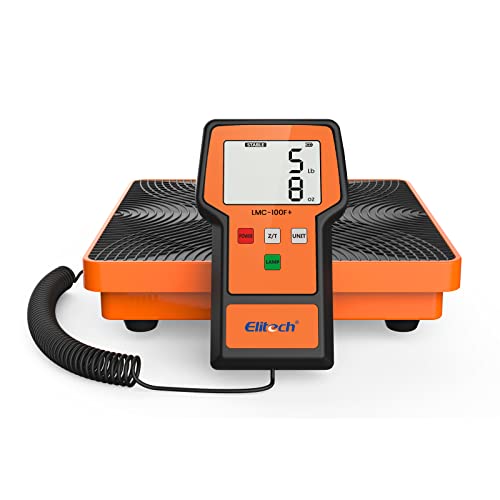 Elitech refrigerant scaleCharge tracking runs on the scale
Certification is the legal floor; these are the working instruments beside it. The full kit page.